 how-to
Why Does Your Car Shake When Braking?
Last Updated: October 28, 2026
Quick Summary
If your car shakes when braking, the cause is usually a brake rotor problem, though tires, calipers, and suspension parts can also be to blame. Warped rotors are the most common cause, and the fix depends on pinpointing which part is at fault. Brake vibration rarely fixes itself, and ignoring it can lengthen stopping distance.
- A steering wheel that shakes when braking points to the front brakes, while a shake felt through the seat suggests rear brakes or a tire issue.
- A pulsating brake pedal almost always means the rotor thickness varies across its surface.
- A sticking caliper can mimic a bad rotor by overheating that corner and leaving uneven deposits.
- If the vibration disappears when you are not braking, the brakes are the prime suspect.
- Replacing pads without addressing the rotor surface often reproduces the same vibration within a few thousand miles.
Table of Contents
- Why Your Car Shakes When Braking: The Most Common Causes
- When Your Steering Wheel Shakes When Braking
- Why Your Brake Pedal Pulsates When Stopping
- Signs of a Failing Brake Caliper and Other Non-Rotor Causes
- Brake Inspection and Diagnosis: What a Shop Checks
- Is It Safe to Drive? Urgency and Repair Decisions
- Frequently Asked Questions
Why Your Car Shakes When Braking: The Most Common Causes
If your car shakes when braking, the cause is usually a brake rotor problem, though tires, calipers, and suspension parts can also be to blame. The fix depends on pinpointing which part is at fault. Brake vibration rarely fixes itself, and ignoring it can lengthen stopping distance. Below, we break down the causes and how a shop finds the real one.
Warped, Damaged, or Uneven Brake Rotors
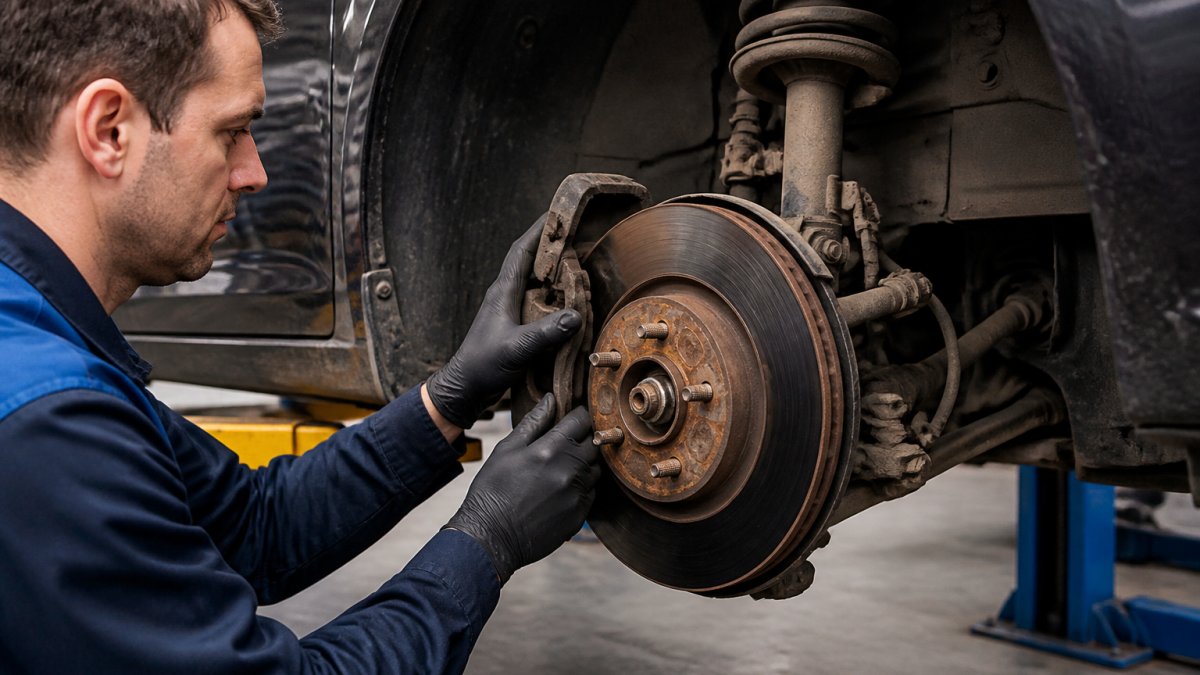
Warped rotors are the most common cause of a shaking car under braking. A rotor is the metal disc the brake pads clamp down on. Heat, hard braking, and normal wear can make its surface uneven. When that happens, the pads skip across the surface instead of gripping it smoothly, and you feel a shudder through the pedal and wheel.
How Brake Rotors and Pads Work Together
The brake system turns motion into heat. Pads squeeze the rotor, and friction slows the wheel. For smooth braking, the rotor surface must stay flat and the pads must wear evenly. When one side wears faster, contact becomes uneven and vibration starts. A sticking brake caliper, which holds a pad against the rotor, is a frequent culprit behind uneven pad wear.
Rust, Deposits, and Uneven Pad Wear
Brake deposits and rust both roughen the rotor surface. Cars that sit for long stretches often build rust on the rotors, and the first few stops feel rough. Uneven pad wear leaves high and low spots that cause pulsating. A common mistake is replacing pads but skipping the rotors, which leaves the old uneven surface in place.
When Your Steering Wheel Shakes When Braking
A steering wheel that shakes when braking points to the front brakes, since the front wheels carry most of the stopping force and are linked directly to the steering. If the shake shows up mainly through the seat or the whole car, rear brakes or a tire issue is more likely. This symptom split is the fastest way to narrow down the cause before any parts come off.
Front Brakes vs. Rear Brakes: What the Shake Tells You
Front brake trouble sends vibration straight into the steering wheel. Rear brake trouble tends to show up as a shake you feel through the seat and floor. This clue can help narrow down where to look first.
Why Your Brake Pedal Pulsates When Stopping
A brake pedal that pulsates when stopping almost always means the rotor thickness varies across its surface. As the wheel turns, the pads pass over thicker and thinner sections, pushing the pedal back at you in a rhythm. You feel it as a pulsing or pumping under your foot. This is a brake system warning, not a normal feel.
Rotor Runout vs. Disc Thickness Variation
Rotor runout is side-to-side wobble as the rotor spins. Disc thickness variation is the rotor being thicker in some spots than others. Runout often leads to thickness variation over time. Both measurements can help confirm the diagnosis.
Signs of a Failing Brake Caliper and Other Non-Rotor Causes
A failing brake caliper can mimic a bad rotor, and misdiagnosing it wastes money on rotors that were never the problem. Watch for a car that pulls to one side when you brake, a burning smell after a short drive, or one wheel that runs noticeably hotter than the others. A caliper that sticks keeps a pad pressed against the rotor, which overheats that corner, glazes the pad, and can leave uneven deposits that feel exactly like a warped rotor.
How to Tell Non-Rotor Causes Apart
The fastest way to separate brake causes from tire, hub, and suspension causes is to note when the shake happens and where you feel it.
Schedule An appointment online →
- Shakes only while braking, felt in the steering wheel: front brake rotors, front calipers, or front hub play.
- Shakes only while braking, felt in the seat and floor: rear brake rotors or rear calipers.
- Shakes at highway speed with or without braking: wheel balance, tire tread separation, or a bent wheel.
If the vibration disappears when you are not braking, the brakes are the prime suspect. If it persists while coasting, look at tires, wheels, hubs, and suspension first.
Tires, Wheels, Bearings, and Suspension
Not every shake comes from the brakes. Check these too:
- Tires: uneven wear, cupping, or a separated tread causes vibration that can feel like brake shudder. Cupping or flat spots may be visible on the tire.
- Wheel balance and alignment: off-balance wheels shake at high speed; poor alignment wears tires unevenly and can add a pull under braking.
- Wheel hub and wheel bearing: a worn bearing adds play, noise, and sometimes a pulsation that mimics rotor runout. Wheel play can be checked by rocking the wheel.
Brake Inspection and Diagnosis: What a Shop Checks
A brake inspection can help identify the cause of a shake. Here are some checks that may be relevant and what the numbers mean.
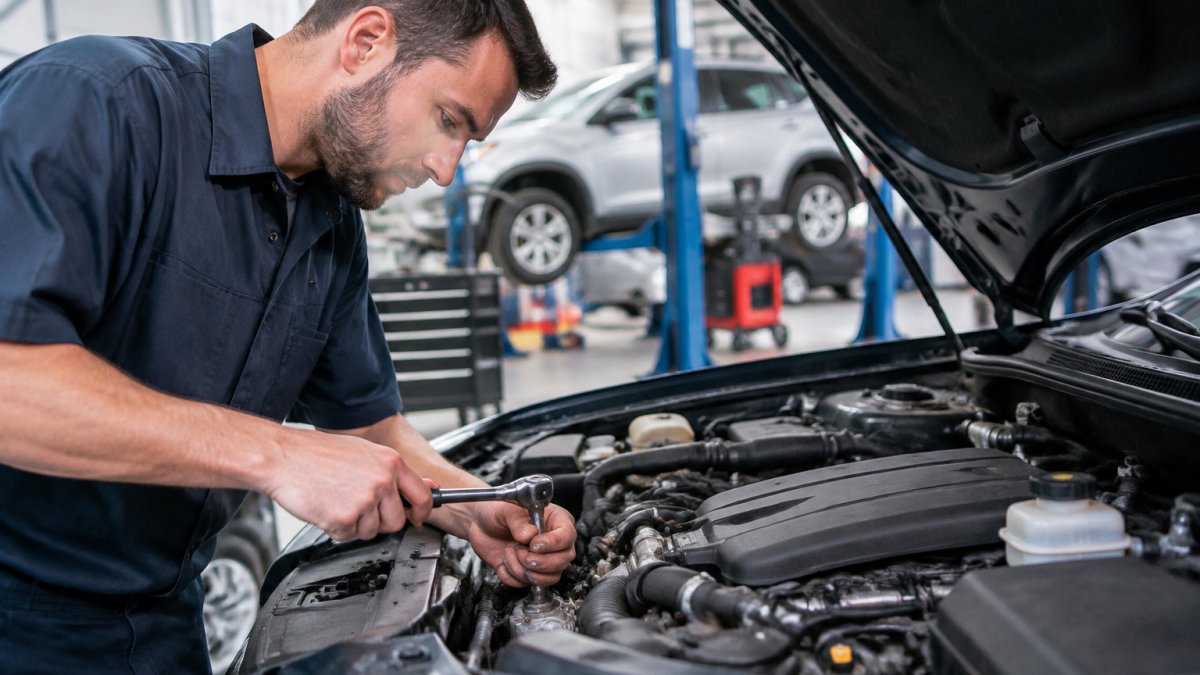
- Road test. Confirm the vibration, note the speed range where it appears, whether it is felt in the steering wheel, pedal, or seat, and whether it happens without braking. This narrows the suspect list before the car goes on the lift.
- Remove the wheels and measure rotor thickness. Manufacturers stamp a minimum thickness spec on the rotor or list it in the service information. A rotor at or below that spec cannot be resurfaced safely and must be replaced.
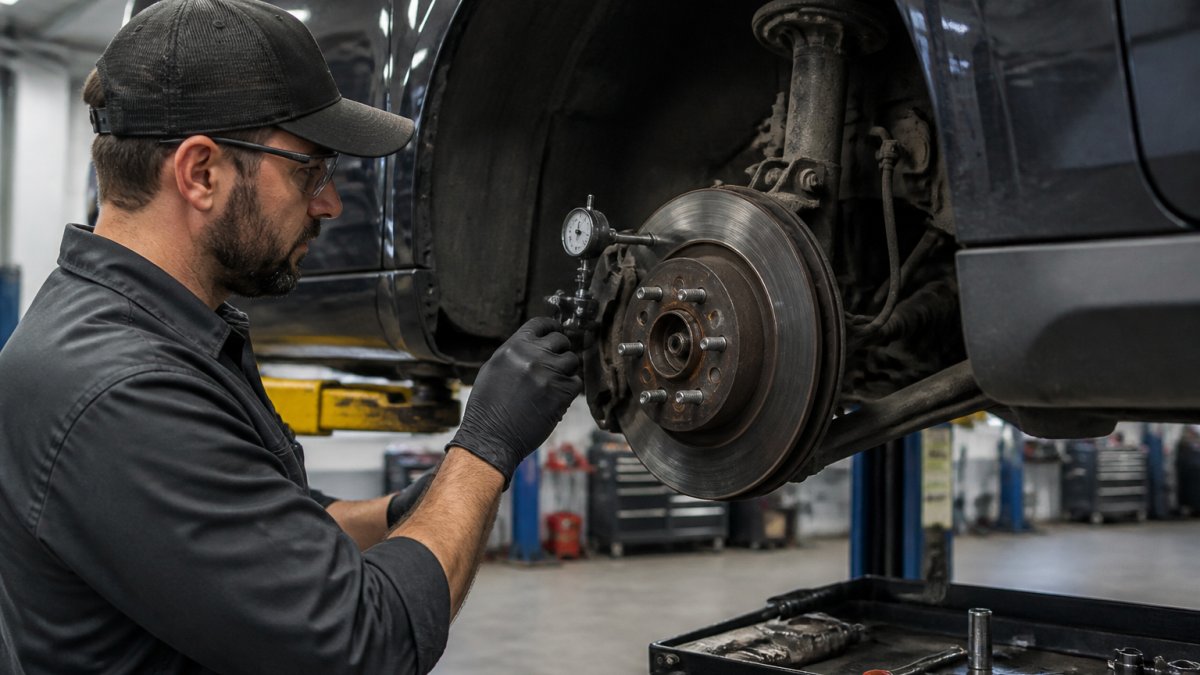
- Measure rotor runout. Most manufacturers specify a maximum runout in the thousandths of an inch; a reading beyond spec points to a bent rotor, a dirty hub face, or uneven lug torque.
- Check for disc thickness variation. Measuring thickness at multiple points around the rotor reveals high and low spots. This is the condition that pushes the pedal back at you and is often caused by runout wearing the rotor unevenly over time.
- Inspect brake pads. Look for uneven wear side to side, tapered wear, cracked friction material, or a pad worn to the wear indicator. Uneven pad wear on one side of the car points to a sticking caliper.
- Test each caliper. A caliper that drags may affect braking.
- Check brake fluid and lines. Old fluid, a collapsed hose, or a leaking caliper can affect braking balance and contribute to uneven wear.
- Check tires, wheel bearings, and suspension. Rock each wheel for play, inspect tread for cupping, and check struts, shocks, and bushings for wear.
Resurface or Replace? How the Decision Is Made
Resurfacing removes a thin layer of metal to restore a flat surface, but it is only an option when the rotor still has enough thickness left to stay above the minimum spec after machining.
If your brakes are shaking, schedule an appointment online.
Is It Safe to Drive? Urgency and Repair Decisions
Mild vibration with normal pedal feel is usually safe to drive short distances, but get it checked soon. Stop driving and call for service if you notice any of these:
- The pedal sinks or feels soft.
- The car pulls hard to one side when braking.
- You hear grinding metal.
Repair decisions come down to measurement. If a rotor is still thick enough, a resurface can fix it. If it is worn below spec or cracked, replacement is the safe call.
Frequently Asked Questions
Is it safe to drive if my car shakes when braking?
Drive cautiously and get it inspected soon. A mild shake from worn rotors is common, but shaking that gets worse, comes with a soft or pulsating pedal, or pulls the car to one side can mean a sticking caliper or a brake component close to failure. Those conditions can lengthen stopping distance. If the shake is severe or you hear grinding, stop driving and have the brakes checked before your next trip.
Why does my steering wheel shake when braking but not while driving normally?
A shake that appears only under braking usually points to the front brakes, since the steering wheel is connected directly to the front suspension. Warped or unevenly worn front rotors, or a caliper that is not releasing evenly, send vibration through the steering. If the wheel also shakes at highway speed without braking, have your tires balanced and check for bent wheels or worn front-end parts.
Can warped brake rotors make a car shake, and can they be resurfaced?
Yes, warped or uneven rotors are the most common cause of braking vibration. Resurfacing is sometimes possible, but only if the rotor still has enough thickness left after machining and is not cracked or heavily rusted. Many modern rotors are thinner from the start, so replacement is often the better choice. A brake inspection and diagnosis can help determine which option fits your car.
What are the signs of a failing brake caliper?
Watch for a car that pulls to one side when braking, a brake pedal that pulsates when stopping, uneven pad wear between the inner and outer pad, a burning smell after driving, or one wheel that is noticeably hotter than the others. A sticking caliper can also cause the car to drag or feel sluggish. These signs of a failing brake caliper are worth checking quickly because a seized caliper can overheat the rotor and damage nearby parts.
A shaking wheel or pulsating pedal is your car asking for attention, and the cause is findable with the right testing. At G&K Auto Repair, we focus on timely testing and repairs done right the first time, so you get a straight answer and a safe car back. We check the whole brake system, explain what we find, and fix only what is needed. Get started with G&K Auto Repair and schedule your appointment online today.