 how-to
Signs of Bad Transmission Fluid and What to Do Next
Quick Summary
Warning signs of bad transmission fluid include gears that slip, delayed or harsh shifts, whining or humming noises, and reddish or brown puddles under the car. Dark, gritty, or burnt-smelling fluid also signals trouble. If the car slips badly or won't engage a gear, stop driving and have it towed to a shop.
- Low fluid is often caused by a leak, so check driveways and parking spots for reddish or brown puddles.
- Color alone is not a diagnosis, so pair appearance and smell with the level check and a test drive.
- Gritty, sludgy, or tacky fluid suggests clutch material or metal debris is suspended in it.
- Use the exact fluid specification from your owner's manual and do not overfill, since too much fluid foams.
- Driving with low fluid can overheat and damage the transmission quickly.
Table of Contents
- Signs of Bad Transmission Fluid and What to Do Next
- Why Transmission Fluid Condition Matters
- Symptoms of Low Transmission Fluid to Watch For
- Bad Transmission Fluid Color and Odor Changes
- How to Check Transmission Fluid Safely, Step by Step
- Transmission Fluid Change Interval and Your Next Step
- Frequently Asked Questions
Signs of Bad Transmission Fluid and What to Do Next
Last Updated: November 1, 2026
Why Transmission Fluid Condition Matters
Transmission fluid does three jobs at once. It lubricates moving parts, cools the transmission, and helps hydraulic pressure shift gears smoothly. When the fluid breaks down, all three jobs suffer. The warning signs of bad transmission fluid often show up long before a costly failure.
Think of the fluid as the transmission's lifeline. Old or contaminated fluid can't protect the metal parts inside. Friction builds, heat rises, and small problems turn into big ones.
Bad fluid rarely fails all at once. It usually fades over months, which is why many drivers miss the early signs.
Here is what healthy fluid does for your vehicle:
- Keeps gears and clutches lubricated
- Carries heat away from the transmission
- Maintains the hydraulic pressure needed for shifting
A transmission that runs on tired fluid works harder, runs hotter, and wears out sooner.
Symptoms of Low Transmission Fluid to Watch For
Low fluid is one of the most common causes of transmission trouble.
What low fluid usually feels like:
- Gears that slip or change without warning
- Delayed shifts when you put the car in drive or reverse
- Rough or harsh shifting between gears
Low fluid is often caused by a leak. Check your driveway and parking spots for reddish or brown puddles.
Watch out: Driving with low fluid can overheat and damage the transmission quickly.
The article lists the most common signs of low transmission fluid and how serious each one is.
| Symptom | Possible cause | Action |
|---|---|---|
| Gears slip or change without warning | Low fluid level | Stop driving and have it towed |
| Delayed shifts into drive or reverse | Low fluid pressure | Have it inspected soon |
| Rough or harsh shifting | Low fluid or worn parts | Have it inspected soon |
| Whining or humming noise | Low fluid level | Have it inspected soon |
| Trouble getting into gear | Low fluid level | Stop driving and have it towed |
| Reddish or brown puddles | Fluid leak | Have the car inspected soon |
Bad Transmission Fluid Color and Odor Changes
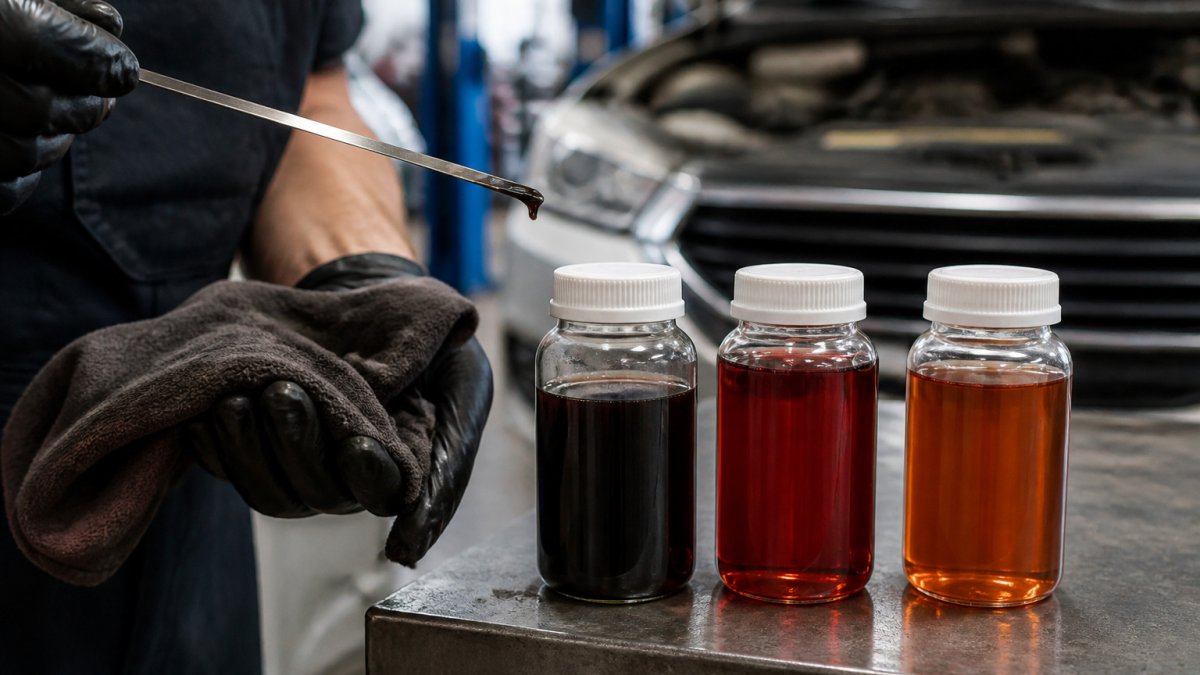
Color and smell are the two easiest signs for a driver to notice, but they are also the two most misread. Fluid color varies by formulation, age, and transmission type, so a single color chart cannot diagnose your transmission. Use color and odor as clues, then confirm with level, texture, and driving behavior.
Why color alone is not a diagnosis:
- Original equipment fluids are not all red. Some newer formulations are amber, green, or even blue-tinted, and some continuously variable transmission (CVT) fluids are yellowish. A brownish tint on an amber fluid may be normal aging, while the same tint on a red fluid signals heat exposure.
- Dye fades with normal service life. A fluid that has darkened slightly but still smells neutral and feels slick is often just due for service, not failing.
- Color can look fine while the fluid has lost its friction modifiers. Additive depletion is invisible to the eye, which is why mileage and service history matter as much as appearance.
What to look for beyond color:
- Texture: Healthy fluid feels slick and uniform between your fingers. Gritty, sludgy, or tacky fluid suggests clutch material or metal debris is suspended in it.
- Clarity: Cloudy or milky fluid can indicate coolant or water contamination, a coolant leak into the transmission cooler is a common cause. This needs prompt diagnosis, not a simple fluid change.
- Particles: Visible flakes, glitter, or dark specks on the rag point to internal wear. Fine clutch dust is normal in small amounts; metallic glitter is not.
Odor changes to look for:
Schedule An appointment online →
- A mild, sweetish smell is typical of normal fluid with some miles on it.
- A burnt or acrid smell means the fluid has been overheated. Common causes include low level, heavy towing, stop-and-go traffic in hot weather, or a failing cooler.
- A sharp, chemical, or varnish-like odor can indicate the wrong fluid was installed or that internal clutch material is breaking down.
Fluid appearance by transmission type (general patterns, not rules):
- Traditional automatic (step-gear): Typically red or pink when new; darkens to brown with heat and mileage.
- CVT: Often amber, green, or yellowish; darkening is expected with age, but grit or a burnt smell is a red flag.
- Dual-clutch: Fluid may be amber or straw-colored; some units share fluid with the gearbox, so appearance alone tells you little.
If the fluid is dark, gritty, or burnt-smelling, schedule an inspection rather than topping off and hoping. Catching contaminated fluid early is usually far less costly than the clutch and valve body damage it can cause.
How to Check Transmission Fluid Safely, Step by Step
Many vehicles have a dipstick for checking transmission fluid, but not all of them do. Check your owner's manual first. Some newer cars have sealed transmissions that require a shop to check the level.
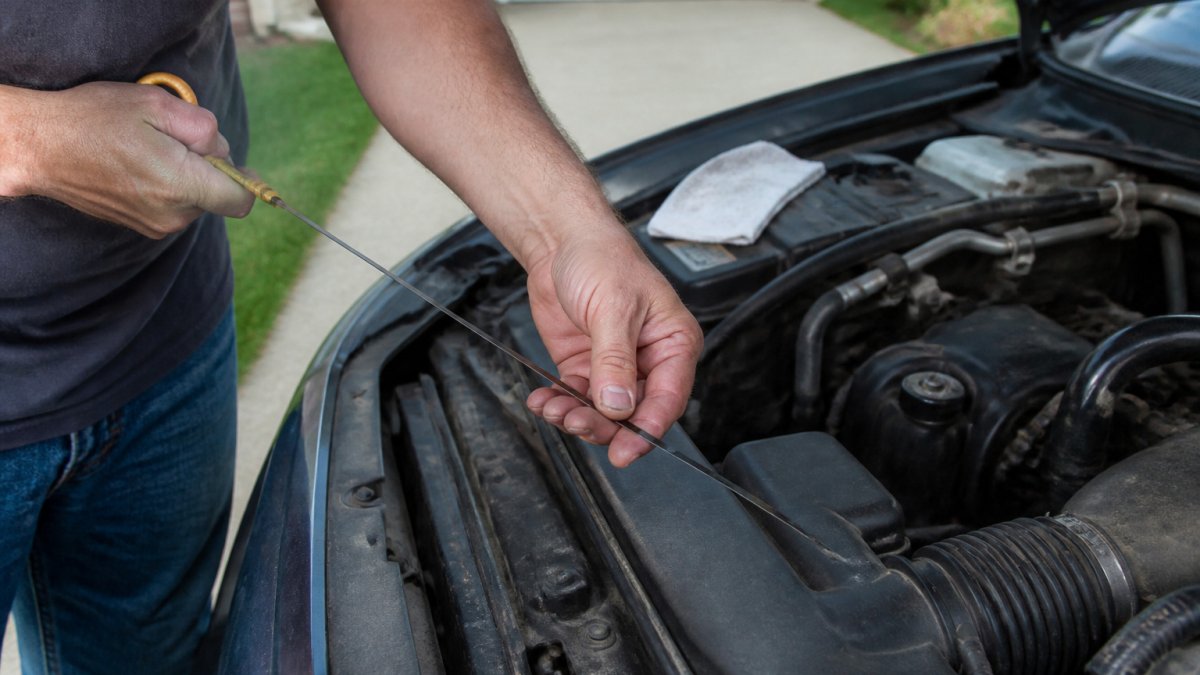
What you will need:
- Clean shop rags or paper towels
- Your owner's manual
- Gloves
Steps for a basic check:
- Park on level ground and let the engine warm up, unless your manual says otherwise.
- Leave the engine running if the manual says the check should be done hot. Keep your hands and clothing away from moving parts.
- Find the transmission dipstick, usually labeled with a red or orange handle.
- Pull the dipstick out and wipe it clean with a rag.
- Push it back in fully, then pull it out again and read the level.
- Note the color and smell of the fluid on the rag.
Watch out: Never check fluid on a hot, running engine unless your manual says to. Burns are a real risk. If you're unsure, leave the check to a professional.
Transmission Fluid Change Interval and Your Next Step
Service intervals vary widely by make, model, transmission type, and how the vehicle is used. There is no universal mileage number, so treat your owner's manual as the authority and adjust for severe use.
What the manual usually tells you:
- Many manufacturers list a normal-service interval and a shorter severe-service interval. Severe use includes frequent short trips, stop-and-go traffic, towing, hauling, rideshare or delivery duty, and driving in dusty or extremely hot conditions.
- Some manuals specify a mileage interval; others specify miles or years, whichever comes first. Follow the shorter of the two.
- A few manufacturers describe fluid as 'lifetime' under normal use. In practice, most transmission shops recommend a service well before high mileage, especially under severe use. Ask your shop what they see on your model.
Use the exact fluid specification. The manual lists a specification code (often printed on the fluid bottle or in the service section).
Match your next step to the urgency level:
- Level 1, Monitor: Fluid looks and smells normal, level is correct, and shifting is smooth. Keep up with the manual's interval and check the level at each oil change or monthly.
- Level 2, Schedule service soon: Fluid is dark or brown, mildly burnt-smelling, or slightly low with no visible leak. Book a fluid and filter service and a leak inspection within the next few weeks. Avoid towing and heavy loads until then.
- Level 3, Inspect promptly: You see reddish or brown puddles, the level is consistently low, or you notice slipping, delayed engagement, or harsh shifts. Have the vehicle inspected within days. Top off with the specified fluid only as a stopgap, and note how much you added.
Prevention checklist:
- Check the level and appearance at every oil change or once a month, whichever comes first.
- Fix leaks promptly; a slow leak becomes a low-fluid overheating problem.
- Follow the severe-service interval if your driving matches those conditions.
When you're ready, schedule an appointment online with G&K Auto Repair.
Frequently Asked Questions
What are the signs that my automatic transmission fluid is bad?
The most common signs are a burnt or sharp odor, fluid that has turned dark brown or black, a milky or pinkish-foamy appearance, slipping gears, delayed or rough shifting, and a visible leak under the car. Any of these means the fluid should be inspected by a technician. A burnt smell or dark color usually means the fluid has overheated and lost its ability to lubricate and cool the transmission, so it is worth having checked soon rather than waiting for a failure.
Can bad transmission fluid cause hard or delayed shifting?
Yes. Transmission fluid builds the hydraulic pressure that engages clutches and bands, so when it is old, low or contaminated, gears can engage late, feel harsh or slip. Hard or delayed shifting can also come from other problems such as a faulty solenoid, a worn clutch or a sensor fault, so the fluid is one thing a technician should check rather than the only cause. A proper fluid inspection helps narrow down the source.
Can I drive with bad or low transmission fluid?
Short distances at low speed may not cause immediate damage, but driving with low or degraded fluid increases heat and wear on internal parts. Stop driving and arrange an inspection if you notice slipping, grinding, a burning smell, the warning light, or the car not moving into gear. Continuing to drive can turn a fluid service into a much more expensive transmission repair.
Why does my transmission fluid smell sweet?
Fresh automatic transmission fluid has a mild, slightly sweet petroleum smell, so a faint sweet odor is normal. A strong sweet smell from under the car can instead point to a coolant leak, since antifreeze smells sweet too. If the fluid itself smells burnt or sharp rather than mildly sweet, the transmission has likely overheated. Comparing the fluid on the dipstick with a fresh sample helps tell the two apart.