 how-to
7 Common Causes of Engine Check Light You Shouldn't Ignore
Last Updated: November 5, 2026
Quick Summary
The most common causes of an engine check light include a loose or faulty gas cap, a faulty oxygen sensor, catalytic converter problems, worn spark plugs or ignition coils, engine misfire, mass airflow sensor trouble, and vacuum leaks. A steady light is safe to drive to a shop, but a flashing light means stop driving.
- A flashing engine check light signals an active misfire that can melt the catalytic converter, so pull over and stop driving.
- Clearing codes before diagnosis can erase freeze-frame data and readiness monitors a technician needs.
- After a repair, the light may stay on until the computer sees the fix across one or more drive cycles.
- A diagnostic trouble code points to a system, not a failed part, so test before you replace.
Table of Contents
- 7 Common Causes of Engine Check Light
- Reasons for a Solid Check Engine Light
- What to Do When the Check Engine Light Comes On and Off
- Check Engine Light On but Car Runs Fine
- Frequently Asked Questions
7 Common Causes of Engine Check Light
A glowing engine check light means something in your emissions or engine control system needs attention. Most causes are simple to trace once the codes are read. Here are the seven most common, ordered from cheapest to check to those needing real diagnosis.
- Loose or faulty gas cap. A cracked seal or a cap left a turn short lets fuel vapor escape, tripping the EVAP system. Tighten until it clicks; replace a cracked cap or one missing its gasket.
- Faulty oxygen sensor. The O2 sensor measures unburned oxygen in your exhaust so the computer can trim the fuel mixture. A slow "lazy" sensor causes poor fuel economy, a surge at steady speed, or a rotten-egg smell.
- Catalytic converter problems. The converter scrubs hydrocarbons, carbon monoxide, and nitrogen oxides from the exhaust. A failing converter robs power, can rattle over bumps, and fails emissions tests. Converters rarely fail alone, usually an unresolved misfire or rich-running engine damages them, so fix the root cause first.
- Worn spark plugs or ignition coils. A worn plug or weak coil causes a rough idle, a stumble under acceleration, and misfire codes. Plugs are scheduled maintenance; coils fail one at a time, often as a shake at idle that smooths out at speed.
- Engine misfire. A cylinder isn't firing on schedule, causing a shake under load; the light may flash rather than stay steady. A flashing light means stop driving, an active misfire dumps unburned fuel into the converter and can melt it. Misfires trace to ignition, fuel delivery, or compression.
- Mass airflow sensor trouble. The MAF sensor tells the computer how much air enters the engine. A dirty or dead sensor throws off the mix, causing rough idling, hesitation, and lean codes. A contaminated element can sometimes be cleaned; one out of spec needs replacement.
- Vacuum leak. A cracked hose or failed intake gasket lets unmetered air in, so the engine runs lean and idles unevenly, often a hunting idle at a stoplight. Cheap to fix once found, but a smoke test is usually the fastest way to locate the crack.
Two less obvious causes are emissions-control system faults, such as a failed purge valve, bad EGR valve, or weak PCV valve, which can trip the light without changing drivability, and fuel-system problems, from a failing fuel pump to contaminated fuel, which can cause lean codes and misfires that mimic ignition trouble.
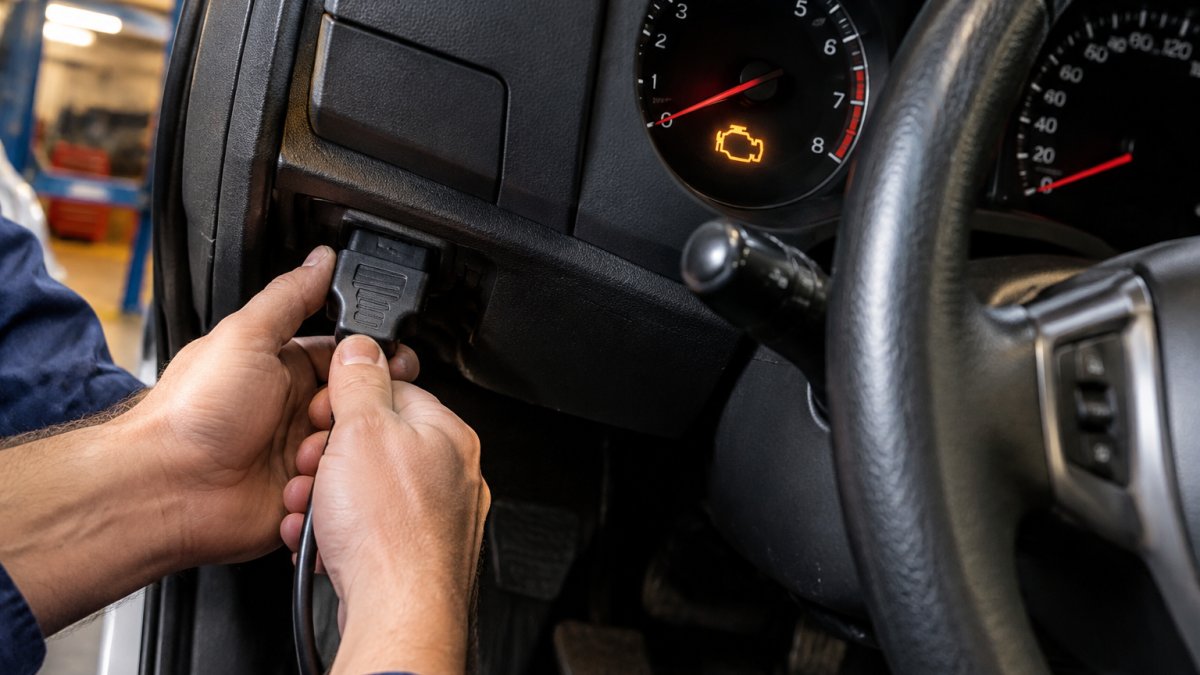
The EPA's emissions and check engine light guidance explains why these systems exist: they catch pollution control faults before they grow. One caution applies to every cause above: a diagnostic trouble code points to a system, not a failed part. A P0420 code says converter efficiency is below threshold, it does not prove the converter is bad, because a bad O2 sensor or an exhaust leak can set the same code. Test before you replace.
Here are the seven most common causes, ordered from cheapest to check to those needing real diagnosis.
Cause | What it does | Fix or next step |
|---|---|---|
Loose or faulty gas cap | Cracked seal or loose cap lets fuel vapor escape | Tighten until it clicks; replace cracked cap |
Faulty oxygen sensor | Lazy sensor causes poor fuel economy, surge, rotten-egg smell | Test before replacing |
Catalytic converter problems | Robs power, rattles over bumps, fails emissions tests | Fix root cause such as misfire first |
Worn spark plugs or ignition coils | Rough idle, stumble under acceleration, misfire codes | Plugs are scheduled maintenance; coils fail one at a time |
Engine misfire | Cylinder not firing on schedule; light may flash | Flashing light means stop driving |
Mass airflow sensor trouble | Rough idling, hesitation, lean codes | Clean contaminated element or replace if out of spec |
Vacuum leak | Unmetered air, lean running, hunting idle at stoplight | Smoke test usually fastest way to locate crack |
Reasons for a Solid Check Engine Light
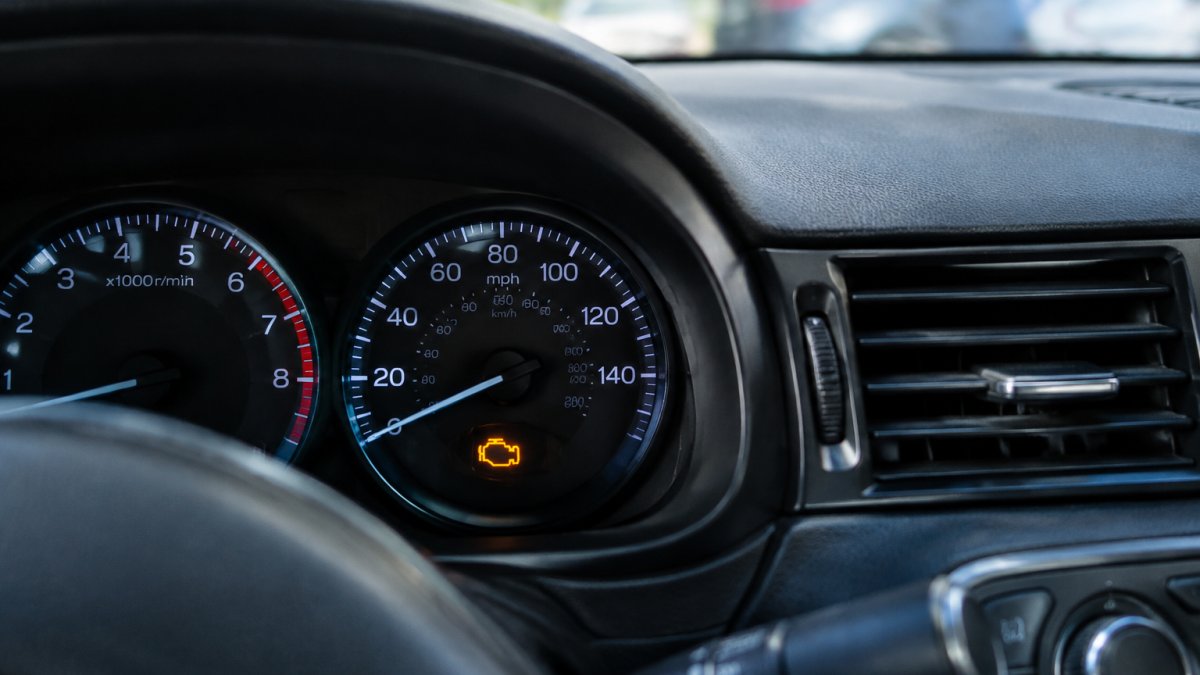
A steady light means a fault is logged but the car is safe to drive to a shop. A flashing light signals an active misfire that can damage the catalytic converter, pull over and stop driving. That distinction is the most useful thing to know when the light comes on.
For a solid light, work through the safe checks in order before you pay for a diagnosis:
- Check the gas cap. Tighten until it clicks; replace it if cracked or missing its seal.
- Note the symptoms. Write down rough idle, hesitation, power loss, worse fuel economy, or odd smells. A pattern, only at highway speed, after a fill-up, or when cold, narrows the cause fast.
- Look for obvious loose hoses under the hood and check the intake air duct is seated, with the engine off and cool.
- Get the codes scanned. Many auto parts stores scan OBD-II codes free; record the exact code numbers, not just descriptions.
Clearing codes before diagnosis can erase freeze-frame data and readiness monitors that a technician uses, and the light may return once the car completes a drive cycle.
After a repair, the light may not go out immediately, the computer must see the fault corrected across one or more drive cycles (cold starts, warm-up, steady-speed driving). If it's still on after a week of normal driving, the fault is still present.
Schedule An appointment online →
A scan is a starting point, not a verdict. Codes point to a system, and testing such as live sensor data, fuel trims, or a smoke test is typically needed before replacing parts.
What to Do When the Check Engine Light Comes On and Off
An intermittent light usually means a loose connection or a sensor on the edge of failing. Note when it appears, at startup, at highway speed, or after a fill-up, to narrow the cause fast.
Next, check the gas cap and look for loose hoses under the hood. If the light keeps returning, it needs a proper scan; tracing an on-and-off issue takes live data and testing. When you're ready for a professional diagnosis, book a repair appointment to schedule your visit online.
Check Engine Light On but Car Runs Fine
A car can run normally and still have a stored fault, the computer logs it and waits, so the light comes on while drivability stays smooth. Common examples include a small vacuum leak or a lazy oxygen sensor that hasn't failed outright.
Don't ignore it. A minor fault can become a costly repair and may fail an emissions test. A quick scan can confirm what's stored.
Frequently Asked Questions
What is the most common reason for a check engine light to come on?
A loose or faulty gas cap is the most common cause. The fuel system is sealed to control emissions, and a cap that isn't clicked tight or has a worn gasket lets vapor escape, which the emissions control system detects. Tighten the cap until it clicks, then drive a few trips. If the light stays on, a diagnostic scan will confirm whether the cap is the culprit or whether another component is setting the code.
Can I still drive if my check engine light comes on?
A steady light usually means you can drive to a shop for diagnosis, but don't ignore it for weeks. A flashing light is different: it signals an active misfire that can damage the catalytic converter, so reduce speed and get it checked right away. If you also notice shaking, loss of power, or overheating, stop driving and arrange a tow.
Does a check engine light reset actually fix the problem?
No. Clearing the code with a scanner turns the light off, but it doesn't repair the faulty component. The light will come back once the vehicle completes its self-tests and detects the same fault. A proper reset follows a confirmed repair, so the system can relearn and verify the fix before the light stays off.
Your dashboard warning won't diagnose itself, and guessing at parts gets expensive. At G&K Auto Repair, we offer timely testing and repairs done right the first time, backed by clear communication about what we find. Get started with G&K Auto Repair and schedule your appointment online to keep your car safe and dependable.