 how-to
7 Ways to Find an Honest Mechanic and Avoid Getting Ripped Off
Last Updated: October 30, 2026
Quick Summary
To find an honest mechanic, check credentials and reviews for patterns of clear explanations and fair estimates, then ask diagnostic questions before work begins. An honest mechanic diagnoses with evidence, provides written itemized estimates, and documents any approval before charging beyond the estimate.
- Ask what symptom was reproduced and what test confirmed the failure before approving repairs.
- Get a written estimate with parts, labor, and taxes itemized before any work starts.
- Never approve safety-critical repairs like brakes or steering on a verbal recommendation alone.
- If a mechanic keeps your car too long, request a written status update and firm completion date.
- After repairs, reproduce the original conditions to confirm the symptom is gone, not just quieter.
Table of Contents
- Start With Signs of an Honest Mechanic Before You Book
- Questions to Ask a Mechanic Before Repair Work Begins
- How to Spot Mechanic Upsell Tactics Before You Approve Anything
- What to Do If a Mechanic Keeps My Car Too Long
- Verify the Repair Fixed the Problem, Not Just the Symptom
- Schedule Your First Visit With an Honest Mechanic
- Frequently Asked Questions
Start With Signs of an Honest Mechanic Before You Book
Learning how to find an honest mechanic starts before you hand over your keys. An honest mechanic diagnoses problems with evidence, explains findings in plain language, and only recommends work your car actually needs. Too many drivers have been burned by shops that sell repairs instead of solving problems.
Credentials, Reviews, and a Clean Paper Trail
Check whether the shop holds a current business license and whether its technicians pursue continuing education.
Then read reviews with a filter on. Look for patterns, not one-off complaints.
- Do reviewers mention clear explanations and fair estimates?
- Does the shop respond to criticism with facts or excuses?
- Are the positive reviews specific ("fixed my brake noise in a day") or vague ("great service")?
A clean paper trail matters too. The Federal Trade Commission's guidance on auto repair is worth reading before you sign anything, since it spells out your rights around estimates and authorization.
Questions to Ask a Mechanic Before Repair Work Begins
These questions to ask a mechanic before repair protect your wallet and your car. Ask them on the phone or at the counter. A trustworthy shop answers without flinching.
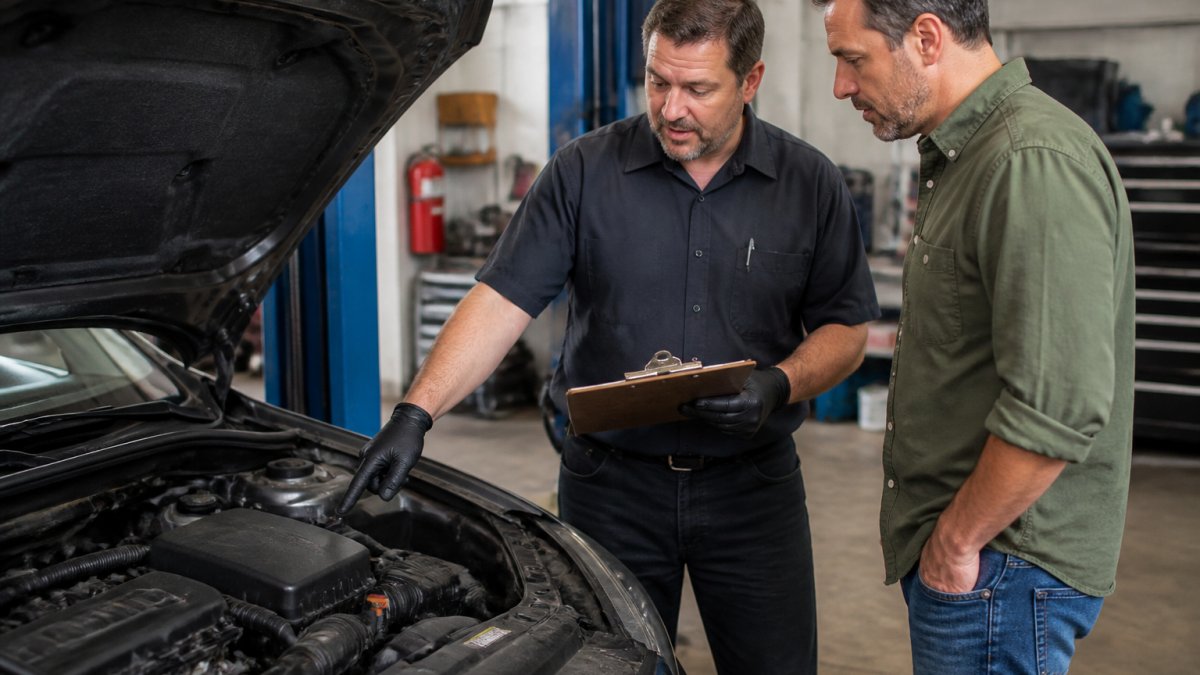
The strongest questions prompt a diagnostic conversation.
1. Symptom and evidence questions
- "What symptom did you reproduce, and under what conditions?" A shop that can describe the cold start, speed, or braking condition that triggered the fault is working from evidence, not a guess.
- "What test confirmed the failure, and can I see the result?" Ask for a scan-tool reading, voltage drop measurement, pressure test, or inspection photo.
- "What else could cause this symptom, and how did you rule those out?"
2. Diagnostic process questions
- "Do you follow a published diagnostic procedure or service information?"
- "Will you test before replacing, or replace and retest?" Parts-swapping is a last resort, not a first step.
- "Is the diagnostic fee separate, and does it apply to the repair if I approve?"
3. Approval and documentation questions
- "Will I get a written estimate with parts, labor, and taxes itemized before work starts?" The Federal Trade Commission's guidance on auto repair explains your right to an estimate and to authorize work before it begins.
- "Will you call me before any work beyond the estimate, and will you document the approval?" Verbal approvals get disputed. Ask for a text or email confirmation.
- "What happens if the repair doesn't fix the problem?" The answer should include a recheck policy, a warranty term, and who pays for the second attempt.
4. Timeline and handoff questions
- "How long will diagnosis take before you know the repair?" Separating diagnostic time from repair time keeps the estimate honest.
- "What could change the timeline, and how will you tell me?" Backordered parts and hidden second faults are legitimate; silence is not.
- "Will you keep the old parts for me to inspect?"
Here are the key questions to ask before any repair work begins, grouped by what they protect.
| Question area | What to ask | Why it matters |
|---|---|---|
| Symptom and evidence | What symptom did you reproduce, and under what conditions? | Shows the shop works from evidence, not a guess |
| Symptom and evidence | What test confirmed the failure, and can I see the result? | Ask for scan-tool reading, voltage drop, pressure test, or photo |
| Diagnostic process | Will you test before replacing, or replace and retest? | Parts-swapping is a last resort, not a first step |
| Diagnostic process | Is the diagnostic fee separate, and does it apply to the repair? | Keeps diagnostic cost clear upfront |
| Approval and documentation | Will I get a written estimate with parts, labor, and taxes itemized? | You have the right to an estimate before work begins |
| Approval and documentation | Will you call me before any work beyond the estimate? | Verbal approvals get disputed; ask for text or email confirmation |
| Approval and documentation | What happens if the repair doesn't fix the problem? | Answer should include recheck policy, warranty term, who pays |
| Timeline and handoff | How long will diagnosis take before you know the repair? | Separating diagnostic time from repair time keeps estimates honest |
How to Spot Mechanic Upsell Tactics Before You Approve Anything
How to spot mechanic upsell tactics comes down to timing and pressure. Legitimate recommendations come with evidence. Upsells come with urgency.
Watch for these patterns:
- The panic pitch. "Your brakes are about to fail, you can't drive home." Real safety issues get documented, not dramatized.
- The mystery bundle. A long list of "while we're in there" items with no explanation of each.
- The vanishing estimate. The price creeps up after the car is on the lift.
A common mistake is approving a verbal recommendation without asking to see the worn part or the test result.
Verify before you approve
Use a short evidence check on every recommended repair, especially safety-critical ones:
- Ask for the failed part or a photo of it. If the part is buried, ask for the inspection photo or the measurement that condemned it.
- Ask for the test result. A scan-tool code, a voltage reading, a pressure reading, or a tread depth measurement should back the recommendation.
- Ask what happens if you decline. A shop that explains the risk in plain terms, and puts it in writing, is giving you a decision, not a threat.
- Ask for the repair order before you sign. The Consumer Federation of America's consumer resources offer practical checklists for reviewing repair paperwork before signing.
Document the approval
When to get a second opinion
Schedule An appointment online →
A second opinion is not an insult; it is a quality control step. Seek one when:
- The diagnosis changed without new test results.
- The estimate jumped significantly after disassembly.
- The recommended repair is safety-critical and the evidence is verbal only.
For a second opinion, ask the first shop to release the car and provide the written estimate and any inspection notes.
The unique angle most guides skip: treat every recommendation as a claim that needs evidence, and your approval as a contract that needs a record.
What to Do If a Mechanic Keeps My Car Too Long
If a mechanic keeps your car too long, get a written status update and a firm completion date.
Start with a simple call. Ask three things:
- What work has been completed so far?
- What is still pending, and why?
- What is the specific date and time the car will be ready?
Write down the answers, including who gave them. If the timeline slips again, ask for the reason in writing.
Some delays are legitimate: backordered parts, a machine shop holdup, or a hidden second fault.
If the delay drags on with no clear answer, ask to pick up the car and get a second opinion.
Verify the Repair Fixed the Problem, Not Just the Symptom
Verifying the repair means confirming the original complaint is gone under the same conditions that triggered it. A quiet engine in the parking lot doesn't prove much.
Use this post-repair check:
- Reproduce the original conditions: cold start, highway speed, hard braking, whatever triggered it
- Confirm the symptom is gone, not just quieter
- Ask what tests were run and what the results showed
If the problem returns, call the shop before you touch anything else.
The National Highway Traffic Safety Administration's recall lookup is also handy here. If a recurring fault matches an open safety recall, the fix may be covered, and that changes the whole conversation.
Schedule Your First Visit With an Honest Mechanic
You now have a checklist, a set of questions, and a way to verify the work. The last step is finding a shop that passes all of it.
G&K Auto Repair focuses on timely testing and repairs done right the first time. If you're ready to stop guessing, book your first appointment and see how a straight answer feels.
Frequently Asked Questions
What are the signs of a dishonest mechanic?
Watch for pressure to approve repairs before you get a written estimate, vague answers about what failed and why, and recommendations that grow every time you call. A dishonest shop often skips the diagnostic step and jumps straight to parts replacement. Honest mechanics show you the worn part, explain the symptom in plain language, and put the estimate in writing before touching your car. If the story changes each time you ask, walk away.
How can I tell if a mechanic is overcharging me?
Ask for a line-item estimate that separates parts from labor and lists the labor rate and hours. Compare that rate against a second written quote from another shop for the same job. Ask whether the parts are new, remanufactured, or aftermarket, since that changes the price. You can also check repair cost guides for your vehicle's make and model. A shop that refuses to break down the estimate or explain the hours is a red flag.
Should I get a second opinion before authorizing major car repairs?
Yes, for anything beyond routine maintenance. Transmission work, engine internals, and major suspension repairs are worth a second written opinion, especially when the first quote is high or the diagnosis sounds vague. Pay the diagnostic fee at the second shop and ask them to confirm or challenge the original finding. Two independent diagnoses that agree give you confidence. Two that disagree tell you to ask harder questions before spending money.
What certifications should I look for in a reliable auto repair shop?
Look for ASE-certified technicians, since that credential requires passing tests and documented experience. Many shops also display state licensing and industry memberships. Ask directly which technicians will work on your car and what training they have on your vehicle's systems, particularly for transmission or electrical work. Certifications are not a guarantee of honesty, but they show the shop invests in training and holds its staff to a recognized standard.
Finding a shop you can trust shouldn't feel like a gamble. G&K Auto Repair gives you clear diagnostics, written estimates, and repairs done right the first time, so you can get back on the road with confidence. Get started with G&K Auto Repair and schedule your appointment online today.