 How-to
Why Your Car Makes a Grinding Noise and What to Do
Last Updated: November 12, 2026
Quick Summary
A car grinding noise almost always means metal is touching metal somewhere it should not, and the cause depends on when you hear it. Grinding while braking points to worn brake pads, while turning points to a wheel bearing or CV joint, and while accelerating points to the transmission or an accessory drive belt.
- Grinding while braking means the brake pad friction material is gone and the backing plate is cutting into the rotor.
- A grind at startup that stops once the engine catches is often the starter or flywheel teeth.
- Topping off power steering fluid is not a fix for steering-related grinding at low speed.
- Front-wheel-drive cars put more stress on CV joints, so a turning grind is often a CV issue.
- Brake, bearing, and transmission repairs need a lift and the right tools, so leave them to a professional.
Table of Contents
- Match the Grinding Noise to the Right Cause
- Grinding Noise While Driving but Not Brakes Applied
- Grinding Noise When Accelerating at Low Speed
- Grinding Noise When Turning the Steering Wheel at Low Speed
- Grinding Noise When Starting the Car
- When a Car Grinding Noise Means Stop Driving
- DIY Checks vs. Professional Repair: What You Can Do
- Vehicle-Specific Nuances That Change the Diagnosis
- Frequently Asked Questions
Match the Grinding Noise to the Right Cause
A grinding noise from your car almost always means metal is touching metal somewhere it should not. The fix depends on when the sound happens. If you are asking why does my car make grinding noise, start with one question: when do you hear it? Grinding while braking points to worn brake pads; while turning, a wheel bearing or CV joint; while accelerating, the transmission or an accessory drive belt.
| When you hear it | Most likely cause | Urgency |
|---|---|---|
| Grinding while braking | Worn brake pads, scored rotor | High, fix now |
| Grinding while turning | Wheel bearing, CV joint | High, safety risk |
| Grinding while accelerating | Transmission, belt, pulley | Medium to high |
If the grind comes with a soft or spongy brake pedal, stop driving and get the car inspected. Once you suspect a serious cause like brakes or transmission, book a professional inspection. Before authorizing any repair, learn how to get an accurate repair estimate.
Grinding Noise While Driving but Not Brakes Applied
A grinding noise while driving but not brakes applied usually comes from a rotating part outside the brake system, most often a failing wheel bearing, a worn CV joint, or the wheel hub assembly. Our guide on why your car shakes when braking walks through those symptoms.
Grinding Noise When Accelerating at Low Speed
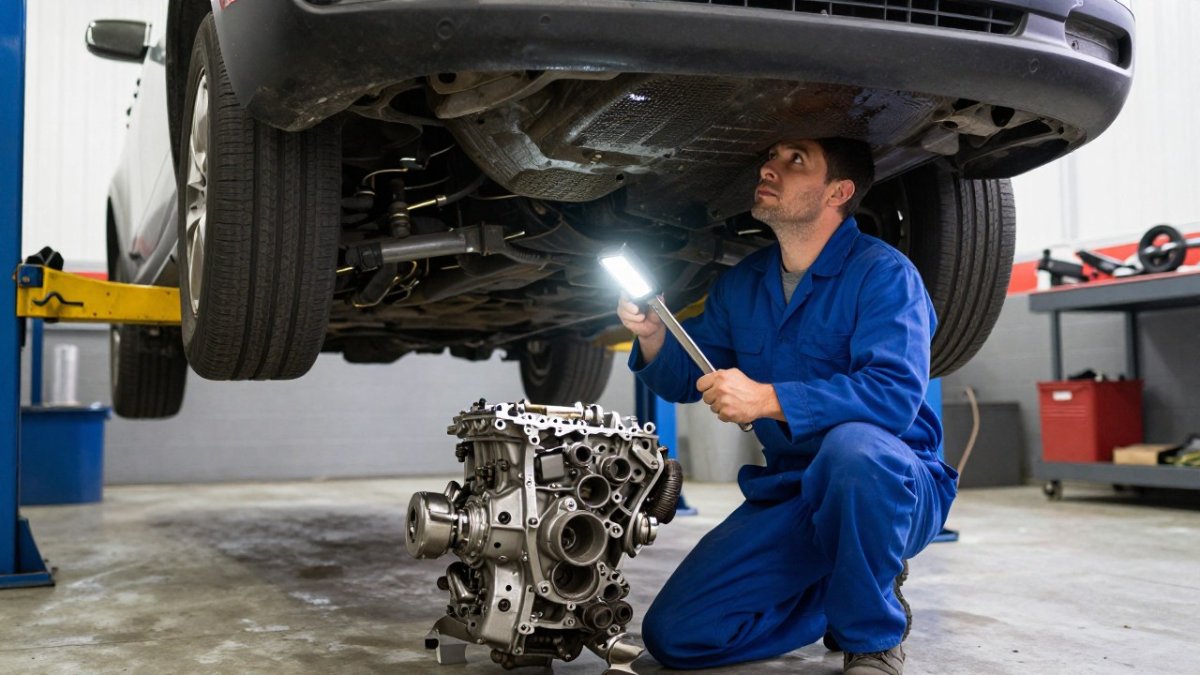
Grinding that appears when you accelerate at low speed often points to the transmission. Check the transmission fluid first, a burned smell or dark color is a red flag. The grind can also come from the accessory drive belt or an alternator pulley, so listen under the hood while the engine idles. If the noise clearly tracks with the transmission, signs of bad transmission fluid explains what to look for. Our local affordable transmission repair service is the place to start.
Grinding Noise When Turning the Steering Wheel at Low Speed
Steering-related grinding at low speed often comes from the power steering pump or the steering linkage. Topping off power steering fluid is not a fix, have the system checked for leaks and pump wear.
Grinding Noise When Starting the Car
A grind at startup that stops once the engine catches is often the starter or the flywheel teeth. If it happens every time you turn the key, get it inspected, do not keep cranking, since repeated grinding wears the flywheel teeth. A grind that continues after the engine starts is more likely a belt or pulley.
When a Car Grinding Noise Means Stop Driving
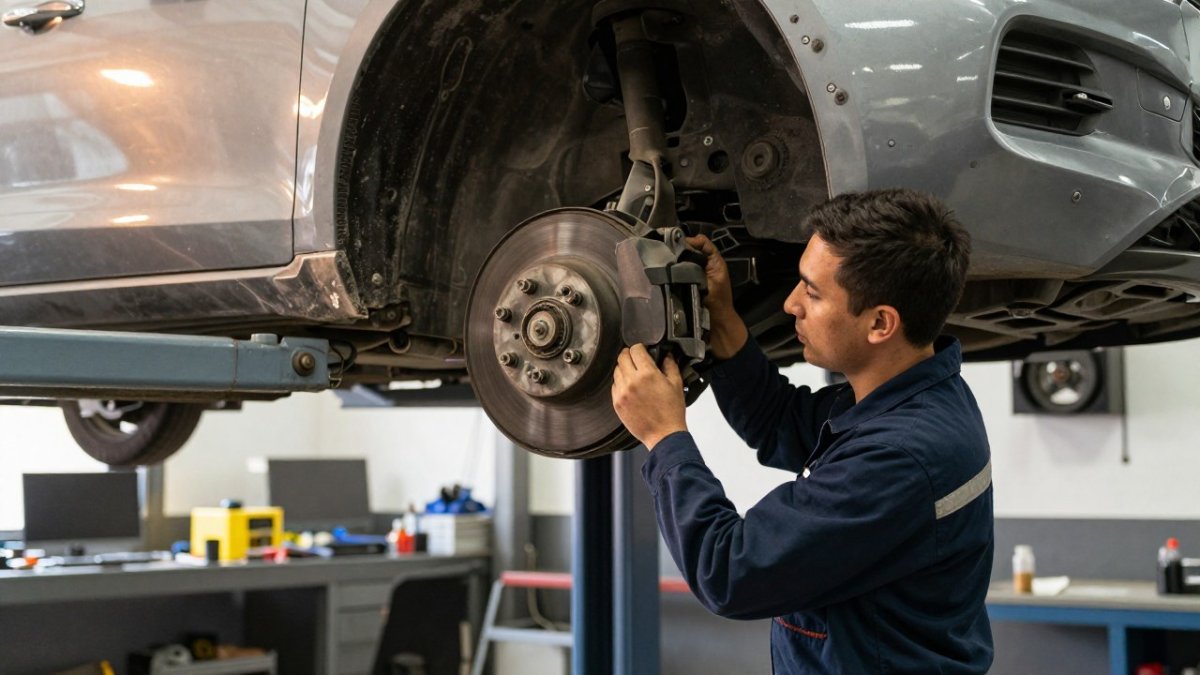
Some grinding noises are a safety hazard. A brake grind from metal-on-metal contact means the brake pad friction material is gone and the backing plate is cutting into the rotor. Pull over and get it looked at.
DIY Checks vs. Professional Repair: What You Can Do
Anything involving brakes, bearings, or the transmission should go to a shop. Guessing and replacing parts is a common mistake; a proper diagnostic inspection is the way to find the real cause.
Vehicle-Specific Nuances That Change the Diagnosis
The same grind can mean different things on different vehicles. Front-wheel-drive cars put more stress on the CV joints, so a turning grind is often a CV issue. Rear-wheel-drive trucks lean more on wheel bearings and the rear axle, and all-wheel-drive vehicles can spread a grind across the drivetrain. Mileage matters too: high-mileage cars are more likely to have bearing play, worn brake lining, and tired transmission fluid, while a newer car with a sudden grind points more toward debris in the brake dust shield or a loose belt.
A grinding noise will not fix itself, and waiting usually makes the repair bigger. At G&K Auto Repair, we focus on timely testing and repairs done right the first time, so you know exactly what is wrong before you approve the work. We walk you through what we find and what it takes to fix it, with no guesswork. Get started with G&K Auto Repair and schedule an appointment online to get your car diagnosed and back on the road safely.
Frequently Asked Questions
Is it safe to drive with a grinding noise?
Treat a grinding noise as a warning, not a quirk. If the sound comes with a soft or long brake pedal, pulling to one side, or a wobbling wheel, stop driving and have the car towed. Book a diagnostic inspection before the noise turns into a safety hazard.
What does a transmission grinding noise sound like?
Transmission grinding is a mechanical growl or whine that changes with speed or gear, not with braking. It often appears when shifting or under load and may come with delayed engagement or slipping. Low or burnt transmission fluid is a common trigger. Because the sound overlaps with wheel bearing and CV joint noise, a diagnostic inspection can help separate drivetrain problems from brake or hub issues.
Why does my car make a grinding noise when I brake?
Brake grinding usually means the brake pad friction material is worn down and the backing plate is pressing against the rotor. That metal-on-metal contact scores the rotor and lengthens stopping distance. Stones or debris caught in the brake dust shield can cause a similar sound. Have the pads, rotors, and caliper checked promptly,